Showing posts with label nutrition tips. Show all posts

Monday, July 16, 2012

Coconut Water


Basically, coconut water is like natural Gatorade. Like Gatorade, it contains water, simple carbohydrates (or, sugar), and electrolytes (or, minerals). Compared to a sports drink made with refined sugars,  artificial flavoring,  and blue food coloring, I’d say coconut water represents a solid upgrade. However, the benefits of sports drinks—whether natural or artificial—tend to be somewhat oversold.


Most sports drinks are consumed by people who aren’t exercising hard enough to need electrolyte replacement or benefit from additional carbohydrates. They end up consuming more calories than they’re burning.  Here are my general guidelines for sports drinks: If you’re exercising very hard for more than 60 minutes, or in extremely hot conditions, a drink containing sugar and minerals can enhance your performance. Otherwise, plain water works just as well—and saves you some calories.

Source: Nutrition Diva

Monday, July 2, 2012

During ride food

Snickers Bar is one of the favourite food to eat during riding because it is chocolate and very convenient to carry due to its bar form. It also has good amount of carbohydrates, protein & fat that are important for fueling during rides.

Personally, I like Snickers because of it taste i.e.  its combination of chocolates, nougat, caramel & peanuts which give better taste satisfaction that other chocolate bars.

Protein improves your post ride recovery


Prolonged and intense endurance training like cycling increases your protein requirements for two reasons. Firstly, you need more to compensate for the increased breakdown of protein during training. When muscle glycogen stores become low (around 60-90 minutes of endurance training) certain amino acids known as branched chain amino acids which make up a substantial proportion of muscle protein (see box below) can be used for energy.

Secondly, and perhaps more importantly for cyclists, protein is vital for the repair and recovery of muscle tissue after a ride. It’s in this post-recovery phase that you may need to rethink what you’re eating. Not only should you be rebuilding your fuel stores immediately after a ride, but you also need to repair damaged muscle fibres as soon as possible.
Eat the wrong foods after training and you’ll end up exhausted with sore, aching legs. If you eat right then your body will get stronger, fitter and recover faster.

Protein-rich foods have additional benefits too – they are involved in producing neurotransmitters, chemical messengers in the brain keeping you alert, focused and energised. They also slow down the release rate of glucose into the bloodstream, helping stabilise blood sugar between rides, and containing energising nutrients such as B vitamins, iron and zinc.

Source: Bike Radar

Thursday, June 28, 2012

How many eggs can you eat per day?


You eat 40 whole eggs per week. 5 to 6 eggs daily at breakfast. You eat them with veggies, really like them and feel full of energy at the gym each time your day starts with an omelet.
But everyone tells you you're crazy eating so many eggs. They tell you eggs are unhealthy because they're full of cholesterol. You'll clock your arteries and die if you continue. Sounds familiar? Truth or myth? Let's see.


Why People Say Eating Lots of Eggs is Unhealthy. Eggs contain high amounts of cholesterol. 1 large egg has about 200mg cholesterol and 5g of fat. Almost half of that fat is saturated fat.
The logic is that since eggs are high in cholesterol, a high egg consumption will increase your blood cholesterol. So by cutting eggs from your diet, your blood cholesterol will decrease. This, however, isn't how your body works.

Facts on Cholesterol. 
You can find studies showing that high cholesterol levels will make you live longer and more immune to infections & diseases than low cholesterol levels. More facts:
  • Your Body Makes Cholesterol. Your liver makes 3-6x more cholesterol than you can get eating eggs and other animal products.
  • Cholesterol is Vital To Your Body. You need it for the production of steroid hormones like Testosterone and to build & repair cells.
  • Dietary Cholesterol Isn't Bound to Blood Cholesterol. There's no relation to cholesterol & saturated fat intake to higher cholesterol levels.

Benefits of Eating The Egg Yolk. 
Eating the yolk makes your life easier since you don't have to separate it from the egg white each time. Eating the yolk is also healthier for 3 reasons:
  • More Vitamins. The yolk is full of vitamins A, D, E. Vitamin D is especially important since most people lack vitamin D.
  • Twice The Protein. Eating whole eggs doubles the protein intake you'd get eating egg whites only: the yolk contains half the protein.
  • Increased Testosterone Levels. Saturated fat and cholesterol increase testosterone production. Both are heavily present in the egg yolk.

How to Protect Yourself Against Heart Diseases.
 This is the real concern people have regarding cholesterol. Some things you can do.
  • Lose Fat. People with high cholesterol usually have excess body fat. Read the article on fat loss and apply.
  • Exercise. This will make you lose fat and improve your health. CheckStrongLifts 5x5 if you don't know where to start.
  • Eat Healthy. No more junk food, sodas, artificial trans-fats and refined sugars. Apply the 8 nutrition rules.
  • Get Antioxidants. Like berries and green tea. These keep your LDL particles acting normal, preventing blockage in arteries.
  • Relax. Stress can negatively influence your cholesterol levels. Relax, take breaks, exercise, think positive, ...
  • Avoid Drugs. Cholesterol lowering drugs are harmful to your liver in the long-term and useless if you don't eat healthier, exercise and lose fat.
If you tried the above and your cholesterol levels haven't improved, then MAYBE you're part of the minority of the population who's genetically predisposed.
Source: StrongLifts.com / photo from FueledbyEggs.com

Which drink is better?


What drink is best for getting and staying hydrated during exercise? Should you choose water? Are sports drinks best? What about juice or carbonated soft drinks? Coffee or tea? Beer?
Water
The natural choice for hydration is water. It hydrates better than any other liquid, both before and during exercise. Water tends to be less expensive and more available than any other drink. You need to drink 4-6 ounces of water for every 15-20 minutes of exercise. That can add up to a lot of water! While some people prefer the taste of water over other drinks, most people find it relatively bland and will stop drinking water before becoming fully hydrated. Water is the best, but it only helps you if you drink it.
Sports Drinks
Sports drinks don't hydrate better than water, but you are more likely to drink larger volumes, which leads to better hydration. The typical sweet-tart taste combination doesn't quench thirst, so you will keep drinking a sports drink long after water has lost its appeal. An attractive array of colors and flavors are available. You can get a carbohydrate boost from sports drinks, in addition to electrolytes which may be lost from perspiration, but these drinks tend to offer lower calories than juice or soft drinks.
Juice
Juice may be nutritious, but it isn't the best choice for hydration. The fructose, or fruit sugar, reduces the rate of water absorption so cells don't get hydrated very quickly. Juice is a food in its own right and it's uncommon for a person to drink sufficient quantities to keep hydrated. Juice has carbohydrates, vitamins, minerals, and electrolytes, but it isn't a great thirst quencher.
Carbonated Soft Drinks
When you get right down to it, the colas and uncolas of the world aren't good for the body. The acids used to carbonate and flavor these beverages will damage your teeth and may even weaken your bones. Soft drinks are devoid of any real nutritional content. Even so, they taste great! You are more likely to drink what you like, so if you love soft drinks then they might be a good way to hydrate. The carbohydrates will slow your absorption of water, but they will also provide a quick energy boost. In the long run, they aren't good for you, but if hydration is your goal, soft drinks aren't a bad choice. Avoid drinks with lots of sugar or caffeine, which will lessen the speed or degree of hydration.
Coffee and Tea
Coffee and tea can sabotage hydration. Both drinks act as diuretics, meaning they cause your kidneys to pull more water out of your bloodstream even as the digestive system is pulling water into your body. It's a two-steps-forward-one-step-back scenario. If you add milk or sugar, then you reduce the rate of water absorption even further. The bottom line? Save the latte for later.
Alcoholic Beverages
A beer might be great after the game, as long as you were the spectator and not the athlete. Alcohol dehydrates your body. Alcoholic beverages are better for hydration than, say, seawater, but that's about it.
The bottom line: Drink water for maximum hydration, but feel free to mix things up a bit to cater to your personal taste. You will drink more of what you like. In the end, the quantity of liquid is the biggest factor for getting and staying hydrated.
Source: about.com/chemistry / photo from beginning nutrition

Instant Carb


I do carry some bars & gels on bike tour FOR EMERGENCY use.
Why? because they can give instant carbs when in urgent need in a small & easy size to carry. 
Yes, they are expensive and tastes funny, so it is optional.
Usually I don't even use them in a tour.
So don't worry, you DON'T have to carry them if you don't want to.

What to eat on bike tour?


I love to eat. When people ask me what to eat for bike tour? I would say, eat more carb before start riding, eat simple carb during cycling and eat carb & protein after ride. Easy rite?

As a Malaysian, I'd eat anything local, but I'd try to skip Nasi Lemak before ride, not because it is not 'sporty' enough for cyclist but because of the sambal that might  hurt my stomach. I'd opt for Roti Canai and Teh Halia instead. And sometimes, I'd eat Bee Hoon Goreng or Mee Goreng, if they are available.

And what if you are overly conscious about your calories intake? Then skip Nasi Lemak or Roti Canai, just eat 2 half-boiled egg & plain bread. Hmmm Boring........

During ride, eat simple carbs like sweets, cakes, bread etc. I used to carry biscuits, nuts, raisins or dates for bike tour. Or simply eat bananas which is easy to digest.

After ride, I usually eat Nasi Campur because I love Rice and I need those carbs, and add up with Fish or Chicken for the Protein we need for muscle recovery. And don't forget the junk food like crackers, potato chips, chocolates too.

So, don't worry too much about what to eat. Just enjoy the tour & the food! Bicycle touring will burn out those calories when you ride slow as we usually do, so eat up!

How and When to Hydrate


Sipping fluids before and after a hot weather workout is just as important as drinking during a ride. Here we turn to the experts for the when, how and what of staying quenched.

Time it right Hydrating before pedaling helps you avoid drying out on the road. For best absorption, sip 12 to 16 ounces of water four hours before hopping onto your bike; two hours before, sip another 12 ounces. While riding, drink enough to match the intensity of the exercise, the heat of the day and your body's needs—the average recommendation is one 16-ounce bottle per hour in cool weather, up to as many as four bottles per hour in extremely hot weather, based on a 150-pound cyclist. Afterward, your goal is to replace lost fluids and electrolytes. If the ride was easy or moderate, sipping water and having a small meal within an hour of finishing should be sufficient, but if the ride was long and intense, use the weighing method below to determine your drinking regimen.

Customize People sweat at different rates, and rides vary in terrain, speed and distance, but hydration goals are the same regardless. "Your aim is to minimize fluid and electrolyte loss or gain," says Douglas Casa, Ph.D., the director of athletic training education at the University of Connecticut, at Storrs. The best way to learn your individual sweat rate: Step on the scale before and after a long or hard ride. If you weigh less afterward, you should be drinking a bit more; if you weigh more, you should cut back to avoid overhydration.

Keep it simple "On easier rides, stick with water. You'll get the mother lode of electrolytes, calories and fluids from the meals and fluids you consume prior to, and after, your ride," says Casa, who's been researching hydration and exercise issues for more than a decade. When a ride is intense, pushes past an hour, or is in hot weather, consider a sports drink. "I recommend staying away from the stuff with 9,000 ingredients," says Casa. "You just need the essentials—fluid, carbohydrates and electrolytes."

Try and try again The only way to find what drinks work for you is by testing them. "Some products may not taste good to you, while others may sit in your stomach in a bad way," says Casa. If you're the type of salty sweater who finds white streaks on your jersey after a ride, you may need a drink with more sodium. For extreme salt sweaters, Casa suggests adding 1/4 teaspoon of salt to 16 ounces of sports drink (that's 600mg of sodium). If you find that a sports drink upsets your stomach, try diluting it with water. "Just never start a big event with a new product in your bottle," says Casa. "That's a recipe for disaster."

Source: Bicycle.com

Monday, June 28, 2010

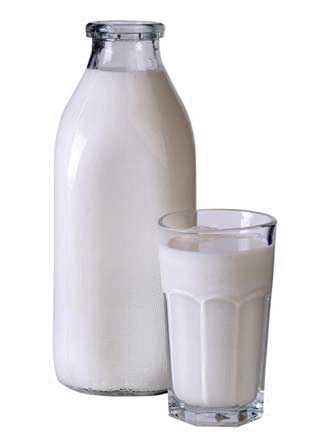
More about milk..

Ok, I love milk. But I'm a lactose intolerant. After I drank a cup of milk, My stomach get gassy and I'll go straight to the toilet! So what can I do about it?

The answer is SKIMMED MILK!

Skimmed milk is less likely to cause symptoms of gastrointestinal dsitress or bloating according to Dr. Phil Watson of Loughborough University!

Yeah..skimmed milk. But normally it comes in powder form and I'd still prefer the Low Fat Milk for its taste. And as long as I'm at home, I don't mind going to the toilet again and again...But no milk for me on the road, though.

Source: cycling asia magazine/ photo from healthkicker

Why Milk?

Evidence has suggested that cow’s milk can be more effective than commercially available sports drinks for recovery after both resistance and endurance exercises. Based on so far limited research, milk appears to be an effective post-resistance exercise beverage that results in favourable acute alterations in protein metabolism: acutely increasing muscle protein synthesis, leading to an improved net muscle protein balance. Studies have now reported that when postexercise milk consumption is combined with resistance training for at least 12 weeks, greater increases in muscle hypertrophy and lean mass are experienced.

There is also some evidence to suggest that milk may be an effective post-exercise beverage for endurance activities. Low-fat milk has been shown to be as effective, if not more effective, than commercially available sports drinks as a rehydration beverage. Moreover, milk is more nutrient dense for individuals who do both strength and endurance training, compared to traditional sports drinks.

Therefore, bovine low-fat fluid milk is a safe and effective post exercise beverage for most individuals–except for those who are lactose intolerant!

Source: mudphudder

Friday, November 20, 2009

Don't water down those minerals

Dissolved minerals, or electrolytes, do more work than you might think - they play the role of gatekeepers, directing the flow of water in and out of body cells.

'The balance of electrolytes is closely tied to the balance of water in the body as one affects the other," explained Ms Teo Kiok Seng, nutritionist at Nutrition Network Services.


'Very small changes in electrolyte levels in the various fluid compartments in our body cause water to move from one compartment to another," she said.


With water being a major component of organs and tissues, electrolytes such as sodium, potassium and calcium are vital for numerous bodily functions.


Other than helping to maintain optimal heart, brain and muscle functions, these electrolytes are also involved in oxygen delivery and in regulating the body's pH levels, said Ms Jaclyn Reutens, a dietitian at Aptima Nutrition & Sports Consultants.


The pH is a measurement of how acidic or alkaline a solution is.


'Hence, dehydration or over-hydration can result in electrolyte disturbances which can lead to life-threatening medical emergencies, such as irregular heartbeat," added Ms Reutens.


Water and electrolytes are lost throughout the day via urine, stools, sweat and breathing, and must be replenished by consuming the right kinds and amounts of food and beverages.


Ms Teo recommended eating plenty of fruits and vegetables in addition to drinking water and other beverages.


'Fruit and vegetables are particularly good sources of water so make sure that you include them in your daily diet," she said. 'For example, water makes up 90 per cent of watermelon."


However, you should not count beverages such as coffee and alcoholic drinks as part of your daily fluid intake. This is because caffeine is diuretic - it promotes urination while reducing your urge to drink. Alcohol inhibits the action of the anti-diuretic hormone, which prevents too much water from being lost through urination, said Ms Teo.


To replenish electrolytes, quick fixes such as a cheese sandwich with wholemeal bread, a chicken sandwich with a banana smoothie or a sports drink can do the job, said MsReutens.


Such replenishment is even more important after exercise, as additional water and electrolytes will be lost through sweat.


'If you exercise, drink up to an extra 1litre of water. If you sweat heavily, take 750ml of sports drinks to replenish water and electrolyte loss," she advised.


Older people should also take extra care to keep themselves hydrated. This is because people become less sensitive to the sensation of thirst as they age. Their kidneys also function less well, said MsTeo.


'A simple way to check if you are drinking enough fluid is to check the colour of your urine," she said.


'The more transparent it is, the more hydrated you are."


Source: The Straits Times/ Mind Your Body by Poon Chian Hui


Sunday, November 15, 2009

Durian....again!

I love durian.

For me it tastes like 'heaven'. Some, like the Thai's tastes sweet but for me the bitter the better, like durian 'kampung' or D24 (cloned).

Most asians like it because you can get it only in side of the world- Malaysia, Indonesia, Thailand, Philippines, Cambodia, Myanmar, Vietnam, etc.

But many people especially the non-Asian hate it- some said it smells like 'shit', garbage, vomit, etc. Well, I can't blame them. It does gives a strong pungent smell. And that is why most hotels ban durians from being consumed in the rooms.

However, despite being good source in Vitamin C and dietary fibre, low in cholesterol & sodium, a slice of durian does give you 300++ calories. In comparison to 1 sachet of PowerGel (120) & Gu EnergyGel (100) and banana (200).

Ah, people will say..what the heck! it's only 300. Yeah..but ask yourself these questions- do you only eat 1 slice? How many times do you have your meal? 2? 3? What else do you eat? meat? rice? potato? nasi lemak? roti prata?

Remember that our body can only take 2000-2400 calories a day (average), so you do the math. How much calories can you take in each meal?

I'm not here trying to stop you from enjoying your durian, but due to it's high in carbohydrate (67%), fat (30%) and protein (3%).. please eat it moderately. Do not over-consume durian especially when you are lacking of exercise or sports activities.

And for those who has never try this 'king of fruit'...give it a try ok. In my opinion, it smells better that those 'smelly' cheese that you love. Or perhaps, this carbo/ fat rich fruit is the 'PowerBar' that we need before a long hard bicycle ride!

Source: nutritiondata.com

Wednesday, October 14, 2009

Nutrition: Boost your recovery

Recovery is the often-forgotten part of training. It’s in the periods between training sessions that the body repairs itself and, more importantly, adapts from the training you’ve just done. Nutrition plays a vital role in how the body recovers and adapts from training.


There are two nutrients essential to recovery – carbohydrate and protein. During exercise, carbohydrate acts as the main energy source and the body’s small carbohydrate stores often become depleted.


When this happens, the body is put under a lot of stress and those carb stores need to be quickly restored. The first hour or so after exercise is the optimal time to restore these.


Protein plays a major role in allowing the muscles to regenerate, repair and adapt. After undertaking hard exercise, damage is often done to the muscles. Protein is essential for them to recover. Protein also allows the body to adapt to the training by providing the fuel to build new enzymes and muscle fibres.


Source: bikeradar.com/By Dr Kevin Currell, Triathlon Plus


Tuesday, May 12, 2009

Start Your Engines!

Here are some tips from Nancy Clark, a certified sports dietetics & competitive athletes herself:
  1. Always eat breakfast!
  2. Energy bars are more about convenience than necessity. Go natural.
  3. Food is fuel - not "fattening enemy"..So Eat!
  4. Gatorade & other sport drinks are designed to be used by cyclists during extended exercise, not as a lunch or snack beverage.
  5. Junk food can fit into your sports diet in small amounts. Try 90% quality food and, if desired, 10% foods with marginal nutritional value, e.g. french fries, cookies tec.
  6. Never go out on a ride without carrying some sort of emergency food.
  7. Protein helps recovery from hard workouts, and it should accompany your recovery meal.
  8. Quality nutrition is found in natural food, especially fruits.
  9. Rest is an important part of exercise programme. Your muscle need time to heal.
  10. Cravings for sweets are a sign you've gotten too hungry.
  11. Dont get too hungry. When you're hungry, you'll likely grab the handliest (but not the healtiest) food around.
  12. Being thinner doesn't equate to being a better cyclist if the cost of being thin is skimpy meals and poorly fueled muscles. Focus on being fit and healthy - not just sleek and slim (but starving)
  13. Keep track of calories if you want to lose weight. You'll reduce body fat only if you create a calorie deficit. Biking can help with fat loss if it contributes to calorie deficit (but the more you ride, the more you might eat!)
  14. Urine that is dark coloured and smelly indicates you need to drink more fluid.
  15. Eat well & enjoy your energy!
Source: Adventure Cyclist/ The Cyclists' Kitchen

Monday, May 11, 2009

Reducing muscle soreness

Question: Should I use L-glutamine to reduce muscle soreness after a hard workout?

Answer: Supplementing with L-glutamine is an expensive way to get an amino acid .... you can get it in any protein-rich food. While L-glutamine might enhance recovery of patients in the hospital who have cancer, AIDS, or bowel problems and are not eating, the chances are that you, as a healthy athlete, can consume a multitude of amino acids (not just L-glutamine) through your diet.

Certainly, the best way to enhance recovery is to fuel up before exercise with a carb-protein snack (recovery can actually start pre-exercise, so the "tools" to recover are already in your system) and then to refuel afterwards, again with some carbs + protein. The carbs provide fuel and the protein heals and builds.

Some popular pre- and/or post-exercise options include yogurt, a little cereal/milk, half a sandwich, or lowfat chocolate milk--all in portions that settles well. You really don't need to buy engineered foods. Simply pay more attention to having the right foods readily available; don't let nutrition be your missing link.

What you eat pre-exercise should last you about 60 to 90 minutes, and then you want to target about 200 to 300 calories per hour. Some athletes choose gels because they are convenient, but you need not spend your money on engineered foods. They are more about convenience than necessity. Other athletes enjoy banana, gummy candy, dried fruit, rice crispie treats, twizzlers ... and carb-based food that tastes good and settles well. Experiment to figure out what foods and fluids work best for your body. By staying well fueled, you will be able to recover more easily.

Source: Active.com/ Nancy Clark RD CSSD/ photo from first-fitnesstraining.blog

Thursday, May 1, 2008

Reload quickly

After a long ride be sure to reload your energy stores in a hurry. Otherwise, you will be sluggish and hungry for the rest of the day. So, within twenty minutes of finishing your hard ride, drink a full glass of a good carbo and protein reload drink like Metabolol. You will feel the difference in a hurry.

Source : bikyle.com- cycling tips

Monday, June 25, 2007

Eat your breakfast cereal

Research shows that people who start the day with cereal eat less fat throughout the day, get more vitamins and minerals and have lower cholesterol levels than those who skip it. Plus, people who live to be a 100 or more tend to eat breakfast regularly. Bicycling Magazine.

Source: Bikyle.com- Cycling Tips

Wednesday, June 20, 2007

Durian- King of Calories!

Yes, it's that time again...Durian Season is back!! For durian lovers, here is some facts that you need to know. I have no intention to stop you from eating it but to remind you the risk that you are taking if you eat it too much.
Ok... 1 piece (ulas) of durian, you'll get:
Nutrition Facts
Calories 357
(Kilojoules 1493)


% DV**
Total Fat 13 g 20%
Sat. Fat - 0%
Cholesterol 0 mg 0%
Sodium 5 mg 0%
Total Carbs. 65.8 g 22%
Dietary Fiber 9.2 g 37%
Sugars -
Protein 3.6 g
Calcium 14.6 mg
Potassium 1059.5 mg

Note: A dash indicates no data is available.

*Refuse: 68% (Shell and seeds (for raw fruit))

Fat 117 cals (30%)
Carbs. 263 cals (67%)
Protein 14 cals (4%)

EXERCISE REQUIRED


To burn the calories in this food you can do any of the following exercise.

  • 98 mins of Walking
  • 41 mins of Jogging
  • 29 mins of Swimming
  • 54 mins of Cycling
So, let say u 'accidentally' eat 2 pieces (ulas).... then just multiply it by 2 for how long that you need to exercise to burn off the calories! So, if you eat 1 fruit, does it means that you need to do an IronMan to burn the calories off??......well, you do the math ok?

Source: CalorieKing

Wednesday, June 6, 2007

Durian- King of Fruits

The durian (IPA: [d̪uˈɾi.ɑn]) is the fruit of trees of the genus Durio belonging to the Malvaceae, a large family which includes hibiscus, okra, cotton, mallows and linden trees. Widely known and revered in Southeast Asia as the "King of Fruits,"the fruit is distinctive for its large size, unique odour, and a formidable thorn-covered husk. Its name comes from the Malay word duri (thorn) together with Malay suffix that is -an (for building a noun in Malay), meaning "thorny fruit."

Actual, there is no 'direct' relation between Durian and Cycling but in case that you are riding your bike and accidentally found durians at the side of the road, tie the durians on the top and both sides of the rear rack with a bungee cord that will press them securely to the rack (see above picture- btw that is steve's leg)...and you are good to go!

Source: definitions by Wikipedia.

Thursday, January 4, 2007

Energy Drinks & Food Bars: Power or Hype?

A typical day for Javier starts early and ends late, and he often finds his energy flagging at key times. So he relies on power drinks and energy bars to get him through school, sports practice, his job, and then homework. Although Javier is usually exhausted by the time he falls into bed, he’s also noticed lately that he’s sometimes too jittery and wired to sleep. He wonders if all those power products are giving him a little too much energy.

Energy drinks and nutrition bars often make big promises. Some say they’ll increase energy and alertness, others offer extra nutrition, and some even claim to boost your athletic performance or powers of concentration. But once you cut through the hype and look past the flashy packaging on energy products, chances are what you’re mostly getting is a stiff dose of sugar and caffeine.

So should you eat or drink these products? As with everything, they’re OK in moderation. The occasional energy drink is fine, and a protein bar in the morning is a better choice than not getting any breakfast at all. But people like Javier — who usually has about three or four energy drinks and a couple of protein bars every day — are overdoing it.

Make Smart Choices

With so much going on in our lives, lots of people feel tired and run down. And many of us find ourselves skipping a meal sometimes. So it’s not surprising that nutrition, protein, and energy drinks and food bars have flooded the market, offering us the convenience of energy on the go.

Sometimes, this can be good news — like for the person who has to skip breakfast or the athlete who needs an energy boost before practice. Food bars will never beat a well-balanced meal or snack when it comes to meeting our nutrition needs. But many of them do contain more nutrients than a candy bar or a bag of chips. Likewise, some of the sports or energy drinks on the market today contain some vitamins and minerals.

Know the Downsides

So the occasional power drink or food bar can be a good choice. But as with anything else, it’s possible to get too much of a good thing.

Here are some facts to keep in mind when it comes to food bars or energy drinks.

They contain excessive sugar and calories. Did you know that some energy bars and drinks contain hundreds of calories? That may be OK for athletes who burn lots of calories in high-intensity activities, like competitive cycling. But for many teens the extra sugar and calories just contribute to weight gain, not to mention tooth decay.

Energy drinks are often full of caffeine. Caffeine may be legal, but it is a stimulant drug. It can cause side effects like jitteriness, upset stomach, headaches, and sleep problems — all of which drag you down, not power you up! Plus, taking certain medications or supplements can make caffeine's side effects seem even worse.

Food bars don’t make good meal replacements. You never really see someone eat an energy bar for dinner and then sit back with a satisfied grin. Nothing beats a real meal for both that well-fed feeling and the nutritional satisfaction your body needs.

Although lots of energy drinks and nutrition bars have some vitamins and minerals added, they can’t give you all the different nutrients your body needs to grow, develop, play sports, and handle all the other stuff on your schedule. The only way to get that is through eating a balanced diet and not skipping meals.

They may contain mysterious ingredients. In addition to caffeine and sugar, some brands of energy drinks and food bars can have ingredients whose safety or effectiveness hasn’t been tested — things like guarana (a source of caffeine) and taurine (an amino acid thought to enhance caffeine’s effect). Some contain herbal supplements that are not regulated by the Food and Drug Administration (FDA), such as ginseng.

These kinds of ingredients may cause problems for people who are taking certain medications or have a health condition. So play it safe. Always check the label carefully before you eat or drink any kind of energy supplement.

They’re expensive. Though energy bars and drinks are everywhere these days, they don’t come cheap. At about $3 a pop, you can get a better (and cheaper) energy boost by eating a whole-wheat bagel with cream cheese. And you can get better hydration by drinking 8 ounces of tap water. Other on-the-go foods that provide plenty of nutritional bang for the buck include trail mix, fresh or dried fruits, and whole-wheat breads and cereals.

Cutting Through the Hype

There’s some clever marketing behind energy bars and drinks, and you've got to be a pretty savvy consumer to see through it. So be critical when reading labels. As with everything, if it sounds too good to be true, it probably is.

If energy bars and drinks are becoming their own food group in your diet, remember — “all things in moderation.” These products aren’t harmful if you have them occasionally, but they’re not the healthy choices the advertising hype makes them out to be either.

The truth is, the best energy boost comes from healthy living. People who eat well, drink water, and get enough physical activity and rest will have plenty of energy — the natural way.

Source: KidsHealth-Teens-Food & Fitness-Nutritions Basics: Mary L. Gavin, M.D., March 2006.


Established in December 2006